Ashwagandha Cultivation Guide: Profitable Medicinal Crop Farming in India
medicinal-crops
Ashwagandha is an important medicinal crop widely used in Ayurveda. It is a profitable low-investment crop that farmers can cultivate for higher income.
KhetiwadiUpdated 18 March 20263 min read8,128 views
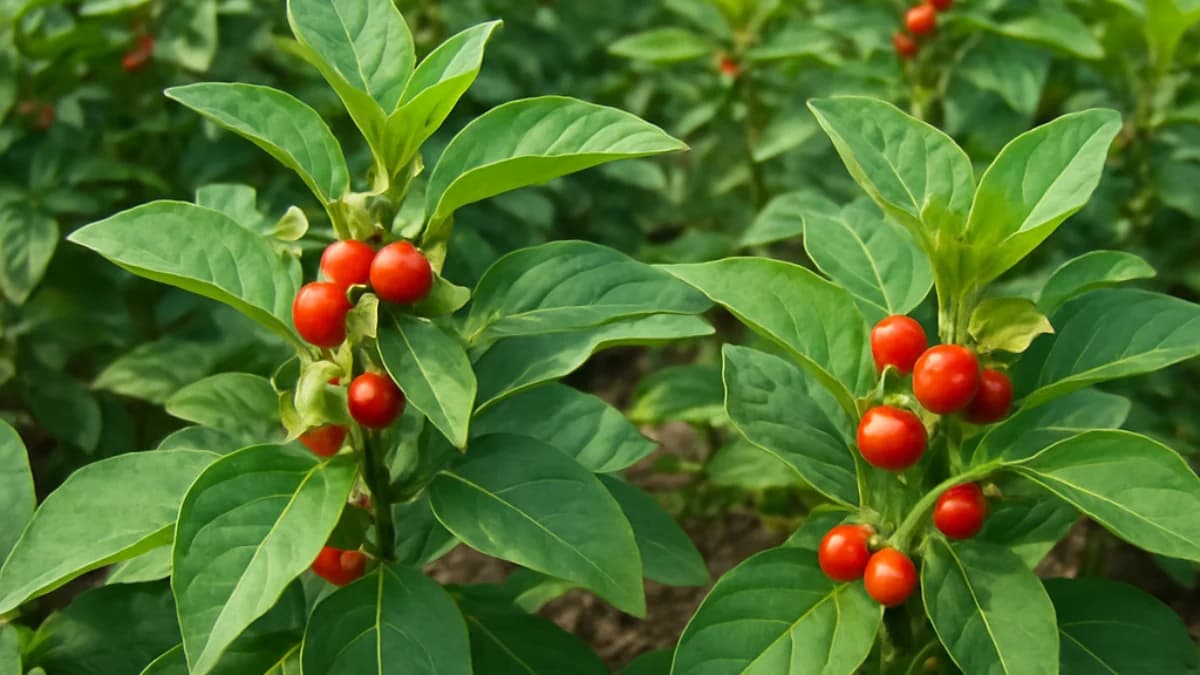
Ashwagandha (Withania somnifera) is one of the most important medicinal plants used in Ayurvedic medicine. It is commonly known as Indian ginseng due to its ability to improve strength, immunity, and overall health. Because of its medicinal value, the demand for Ashwagandha is increasing rapidly in herbal and pharmaceutical industries.
Ashwagandha cultivation is considered a profitable medicinal crop for farmers because it requires low investment and provides good returns. Farmers can earn two to three times the cost of cultivation by growing this crop.
The plant parts such as roots, leaves, seeds, and berries are used in the preparation of Ayurvedic medicines. The roots are especially valuable and widely used in herbal supplements and pharmaceutical formulations.
Ashwagandha grows well in sandy loam or light red soils with good drainage. The ideal soil pH ranges between 7.5 and 8. It is generally sown between July and September during the monsoon season.
Seed requirement for Ashwagandha cultivation is about 5 kg per hectare for nursery raising and around 10–17 kg per hectare for direct sowing.
Plants should be spaced 8–10 cm apart with row spacing of around 20–25 cm. The seeds should not be sown deeper than 1 cm.
Organic manure such as farmyard manure should be applied before sowing. About 5 trolley loads of manure per hectare help improve soil fertility.
The crop matures within 150–175 days. Farmers harvest the crop when leaves start drying. Roots are cleaned, cut, and dried before marketing.
Due to the increasing demand for herbal medicines and Ayurvedic products, Ashwagandha cultivation offers excellent opportunities for farmers to earn higher profits.
Frequently Asked Questions
When is Ashwagandha cultivated?
Ashwagandha is usually sown between July and September during the monsoon season.
How profitable is Ashwagandha cultivation?
Farmers can earn two to three times the cost of cultivation through Ashwagandha farming.
संबंधित लिंक / Related links
Related crops: ashwagandha
Tags
- अश्वगंधा खेती
- ashwagandha cultivation
- medicinal crop farming
- औषधीय फसल
- herbal farming